FeedsFlare
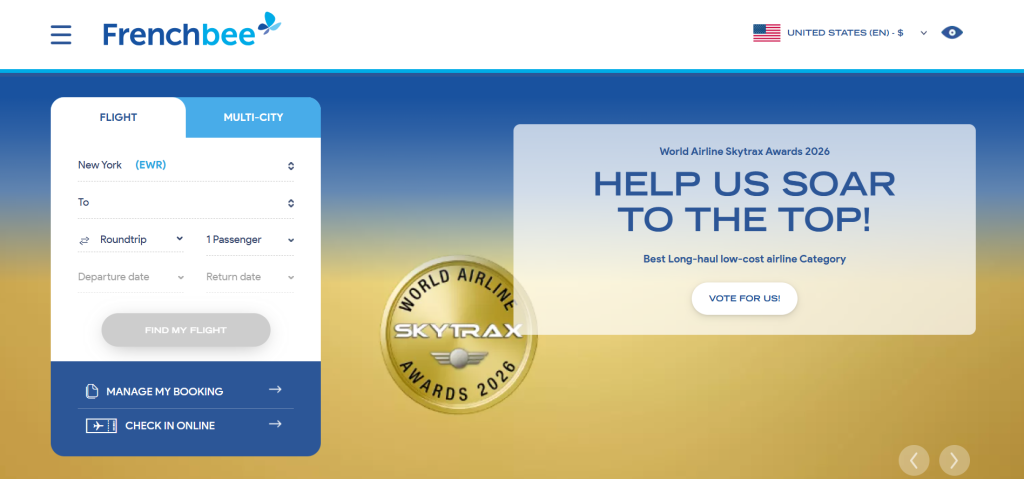
French bee USA, the U.S. division of the French low‑cost long‑haul carrier French bee, announced a significant expansion of its transatlantic flight offerings in 2025 and 2026, with expanded service to Montréal and enhanced interline partnerships that improve connectivity to and from the United States. The airline, which operates under the brand name French bee from major U.S. gateways including Newark Liberty International Airport, San Francisco International Airport, Los Angeles International Airport and Miami International Airport, has been steadily growing its network of nonstop and connecting flights across North America and Europe. Recent developments include daily summer service between Paris‑Orly and Montréal‑Trudeau, adjustments to flight frequencies in response to passenger demand, and new interline agreements with European regional carrier Volotea and Air Caraïbes that enable streamlined travel from smaller European cities into French bee’s long‑haul network.
French bee USA Launches Daily Paris‑Montreal Service
French bee USA has confirmed the launch of daily summer service between Paris‑Orly (ORY) and Montréal‑Trudeau International Airport (YUL) in 2025, marking a further expansion of its North American network beyond U.S. destinations. Initial service between the two cities began on April 30, 2025, with flights scheduled four times per week and increased to daily operation during peak summer months to meet rising passenger demand. The airline reported that its previous schedule was operating at approximately 90 % load factors, justifying the increase in frequency and expanded schedule. French bee’s Airbus A350‑900 aircraft serve the route with a mixed seating configuration that includes both Economy and Premium Blue cabins, providing additional options for transatlantic travelers. This direct link positions French bee USA as a competitive choice for U.S. and Canadian travelers connecting through Paris to reach a wide range of European and leisure destinations while also strengthening French bee’s footprint in North America.
French bee USA Enhances Connectivity With Interline Agreement

French bee USA has joined forces with European regional carriers Volotea and Air Caraïbes to launch a new interline agreement that simplifies travel between regional cities in France and Italy and French bee’s long‑haul destinations, including those serving the U.S. market. The agreement, initiated in August 2025, allows passengers booking through Volotea and Air Caraïbes to enjoy seamless routing on a single ticket, with automatic baggage transfer and coordinated connections through Paris‑Orly Airport. This partnership expands French bee USA’s reach into secondary European markets such as Lourdes, Genoa, Turin and Verona, connecting them to long‑haul flight options including the airline’s extensive transatlantic services. For travelers originating in the United States, the interline agreement means broader access to regional European cities without the complications of separate bookings, offering a more integrated travel experience across carriers.
French bee USA Responds to Increasing Demand With Adjusted Flight Frequencies
In response to strong passenger demand on its newly inaugurated routes, French bee USA adjusted flight frequencies on its Paris‑Orly to Montréal service in mid‑2025, reflecting the airline’s data‑driven approach to scheduling and capacity management. Initially operating five flights per week, the carrier transitioned to daily service to accommodate increased passenger interest and to optimize aircraft utilization. The airline also highlighted promotional efforts to promote its Premium Blue cabin offerings alongside frequency changes, aiming to balance cabin options for both leisure and business travelers connecting transatlantically. These schedule adjustments came after French bee USA observed high load factors and sustained demand in key markets, indicating a robust appetite for its low‑cost long‑haul service model. The ability to adapt flight frequencies in relatively short time frames demonstrates French bee USA’s operational flexibility and commitment to aligning capacity with demand trends, particularly in the competitive transatlantic aviation space where passenger preferences can shift quickly.
French bee USA Maintains Diverse U.S. Gateway Network With Continued Paris Services

French bee USA continues to operate an interconnected network of transatlantic services from major U.S. hubs, including Newark Liberty International Airport (EWR), San Francisco International Airport (SFO), Los Angeles International Airport (LAX) and Miami International Airport (MIA), linking passengers directly to Paris‑Orly. These routes, which span both U.S. coasts and key leisure and business travel markets, form the backbone of French bee’s U.S. operations and support onward connectivity to Europe and beyond. The airline’s service offerings typically utilize modern Airbus A350 aircraft configured for mixed cabin operations, facilitating long‑haul travel between North America and Europe with options aimed at diverse traveler segments. French bee USA’s commitment to maintaining a broad U.S. gateway network aligns with its strategic positioning as a low‑cost long‑haul carrier capable of serving multiple major international airports, while also supporting seasonal or frequency adjustments as market conditions evolve.
French bee USA Integrates Sustainability Goals With Fleet Modernization
As part of its ongoing service enhancements, French bee USA underscores its environmental and sustainability objectives through its exclusive use of Airbus A350 aircraft across its U.S. flight network. These next‑generation aircraft incorporate advanced aerodynamics and fuel‑efficient technologies that reduce carbon emissions per passenger compared to older long‑haul models while supporting quieter and more efficient operations. French bee’s A350 fleet consists of the A350‑900 and larger A350‑1000 variants, both designed with lightweight composite structures and improved propulsion systems, traits that align with emerging industry expectations for lower environmental impact in long‑haul flight operations. The airline’s strategic deployment of these aircraft in U.S. services reflects both commercial and regulatory considerations, as sustainability becomes a more prominent factor in airline operations and consumer awareness globally.
French bee USA Expands Onboard Service Options to Support Long‑Haul Travelers
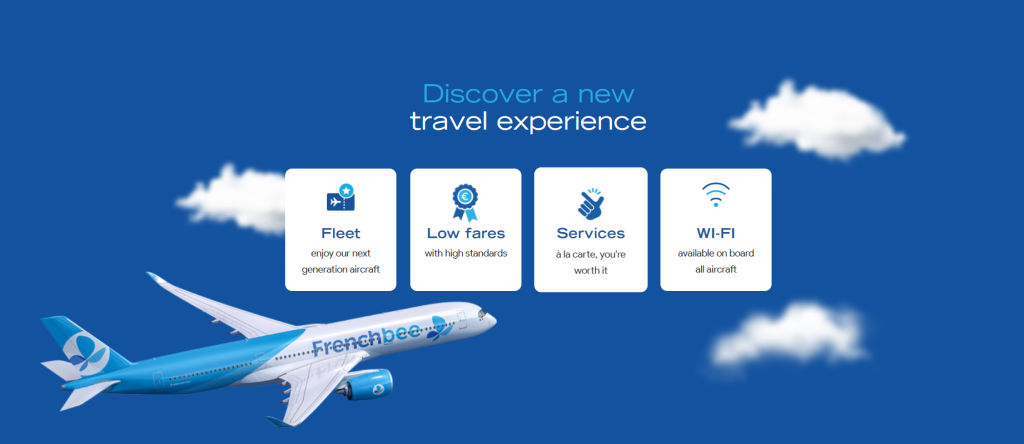
To complement its expanding network, French bee USA has enhanced its onboard service offerings to better serve long‑haul travelers flying between the United States and Paris or Montréal. These service options include multiple fare classes such as Economy and Premium Blue, each with a range of ancillary services available for advance purchase to tailor the passenger experience. While the airline adheres to a low‑cost long‑haul model, its Premium Blue cabin provides additional seating comfort, increased baggage allowances and other amenities for travelers seeking broader on‑board options without shifting to traditional full‑service carriers. Ancillary services such as priority boarding, checked baggage and selected meal options are offered à la carte, aligning with French bee USA’s model of flexible pricing that allows passengers to customize their travel experience.
French bee USA Monitors Market Trends to Sustain Competitive Positioning
French bee USA continues to monitor broader aviation market trends, including shifting transatlantic demand, competitive pricing dynamics and passenger preferences, to inform its strategic planning and service offerings. The airline’s recent network expansions, interline agreements and service adjustments are reflective of a market environment where travelers increasingly seek both cost‑effective long‑haul options and flexible connectivity through partnerships with regional carriers. Ongoing developments in the global aviation landscape, including network adjustments by other European and U.S. carriers and evolving regulatory and economic conditions, factor into French bee USA’s operational strategies as it seeks to sustain and grow its competitive positioning.